

Time to Read: 5m 23s
Class C parts management is the sourcing, inventory, replenishment, and availability management of high-volume, relatively low-cost components that manufacturing, construction, and infrastructure operations depend on. The objective isn’t buying these parts at the lowest unit price. What’s important is to make sure they are available when needed while reducing purchasing transactions, inventory carrying costs, and administrative workload.
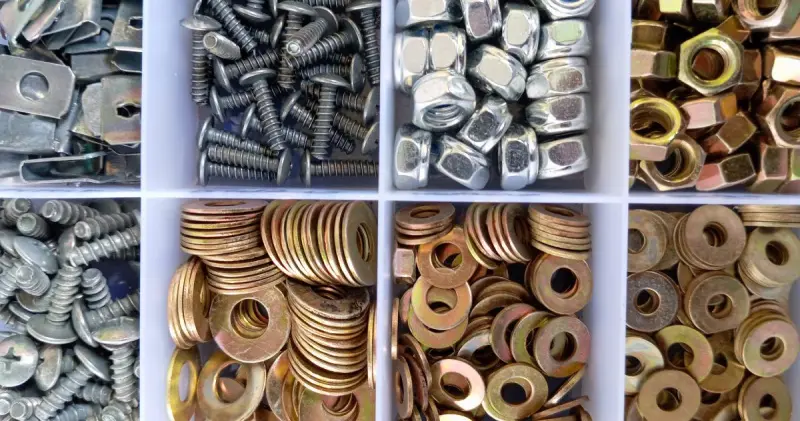
Fasteners and related hardware are common examples of Class C parts. Although individual components may have low dollar values, the operational consequences of not having them can be significant.
Why Class C Parts Matter More Than Their Dollar Value Suggests
A 10 cent washer or $2 fastener may represent a tiny percentage of a project’s material cost. But if that component isn’t available when a crew needs it, the resulting cost can be much larger.
A missing part can delay an installation, interrupt a production line, hold up a work crew, or require an emergency purchase with expedited freight and additional labor. For data center construction and maintenance, where projects operate on tight schedules and demand for infrastructure is high, those risks become even more significant.
As data center construction accelerates, demand for the hardware required to build and maintain these facilities is also increasing. If procurement and production planning don’t account for that demand, supply constraints can create longer lead times and higher costs.
That is why Class C parts shouldn’t be managed based on purchase price alone. The right metric is the total cost and operational impact of keeping those parts available.
Class C Parts in Data Center Construction and Operations
The specific items classified as Class C parts depend on an organization’s spending and consumption profile. In data center construction and operations, they can include:
- Structural and installation fasteners
- Nuts, bolts, and washers
- Anchoring hardware
- Threaded rod and related hardware
- Cable-management hardware
- Racking and mounting hardware
- Electrical and mechanical installation hardware
- Maintenance and repair consumables
The common characteristic is not necessarily the type of product, but the combination of relatively low unit cost, frequent consumption, and the need for reliable availability.
What Class C Parts Management Actually Covers
Effective Class C parts management generally encompasses five core functions:
Sourcing: Identifying qualified suppliers and maintaining access to required parts and specifications.
Inventory management: Establishing appropriate stocking levels based on consumption, lead times, and part criticality.
Replenishment: Monitoring inventory or demand signals and replacing products before they become a problem.
Quality and specification control: Ensuring the correct part, material, grade, dimensions, and other specifications are consistently supplied.
Delivery and availability: Getting the right parts to the right location when they are needed.
For data centers, point-of-use availability can be particularly important. A supplier may need to support multiple construction areas, facilities, contractors, or project phases rather than simply delivering everything to a central receiving dock. The more distributed the operation, the more important inventory visibility and replenishment become.
What Should the Supplier Be Accountable For?
A Class C parts supplier should have clearly defined responsibility for:
- Inventory accuracy
- Replenishment
- Stock availability
- Delivery performance
- Part and specification accuracy
- Quality
- Reporting
- Expediting
- Communication when demand changes
The most important question is straightforward: If a critical Class C part isn’t available when a crew needs it, who owns the problem? A managed program should establish that responsibility before the shortage occurs, not after a project is already waiting on material.
Emergency requirements should also be clearly defined. These are situations in which a fastener or other component is needed outside the normal ordering and replenishment cycle because of unexpected demand, a stockout, a schedule change, or another urgent requirement.
Class C Parts Management vs. Buying Fasteners
Traditional fastener purchasing follows a familiar cycle:
Buyer identifies need → purchase order → shipment → receiving → repeat
That process works, but it can create a surprising amount of administrative work when applied to hundreds of relatively inexpensive, frequently consumed parts.
A managed program changes the process:
Supplier monitors agreed inventory or demand signals → replenishment → delivery → inventory monitoring and reporting
The potential benefit isn’t necessarily a lower price for every fastener. The bigger win is reducing the number of transactions, manual purchasing decisions, stockout events, and other administrative activities associated with managing the long tail of Class C items.
For organizations with significant consumption, that shift can allow procurement teams to spend less time managing routine fastener purchases and more time addressing strategic sourcing, supplier performance, and project requirements.
What Data Center Operators Should Ask a Class C Parts Supplier
Before implementing a managed Class C parts program, procurement teams should ask:
- Can you manage inventory at the facility or point of use?
- How do you determine appropriate stocking levels?
- How quickly can you replenish critical parts?
- Can you support multiple facilities or construction sites?
- How do you maintain part and specification accuracy?
- Who owns inventory and obsolescence?
- What happens when demand suddenly increases?
- What inventory visibility will our procurement team have?
- How are emergency orders handled?
- What service levels are you willing to put in writing?
These questions reveal whether a supplier is simply selling fasteners or actually managing the supply process around them.
How Blue Ribbon Fastener Supports Class C Parts Management
Blue Ribbon Fastener brings more than 40 years of experience in fastener distribution, inventory management, replenishment, and procurement efficiency. We support the reindustrialization of America by applying lessons learned in the freight industry to fastener distribution.
The company has invested heavily in operational capacity, innovation and technology, including virtual VMI, Class B/C Supply Chain Analysis, and ISO 9001:2015 certification. That technology-enabled approach is designed to give customers a differentiated experience while improving visibility and control over the parts that keep operations moving.
Don’t Manage Class C Parts by Unit Price
The objective of Class C parts management isn’t to spend less on every individual fastener. It’s to make sure low-cost, high-volume components don’t consume disproportionate procurement resources or become a bottleneck for higher-value work.
For data center operators, contractors, and infrastructure teams, reliable Class C parts availability can be an important part of maintaining project schedules and operational continuity.
At Blue Ribbon Fastener, our operating principles are straightforward: deliver what we commit to, provide the highest level of customer service possible, communicate openly and directly, maintain a strong attention to detail, solve problems with technology, and view challenges as opportunities to improve.
Find out how Blue Ribbon Fastener can help you evaluate your current Class C parts process. Get a super fast quote today.